
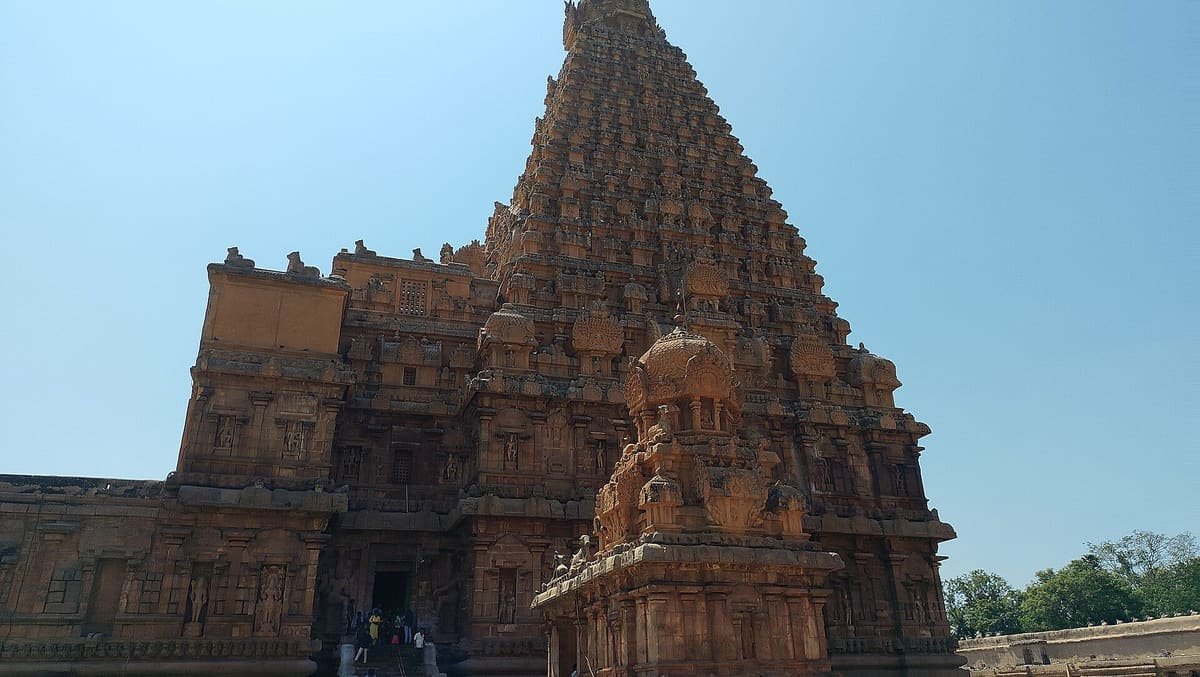
Thanjavur
Capital of the Chola kings. Its Brihadeeswarar Temple, completed in 1010 CE by Rajaraja Chola I, is part of the UNESCO World Heritage Site of the Great Living Chola Temples.
Photo: Shajinss, CC BY-SA 3.0, via Wikimedia Commons
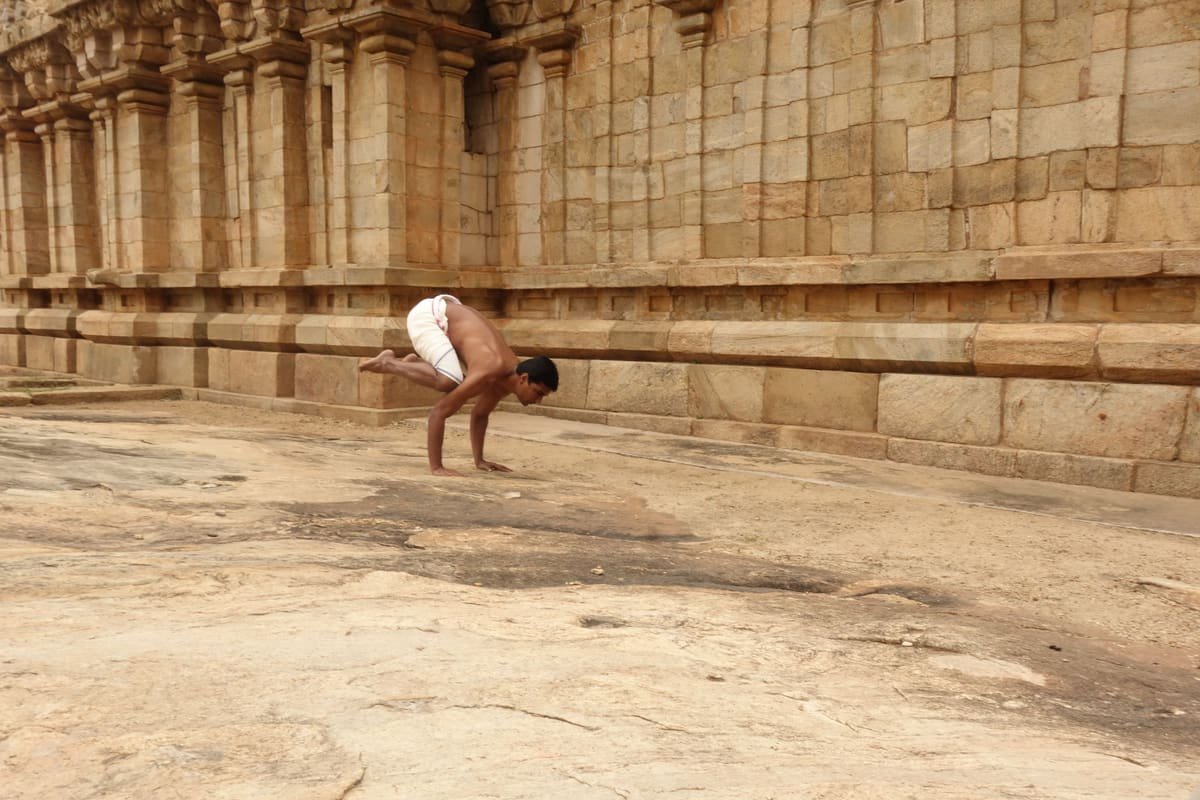
Since 1998 · Between Thanjavur and Trichy
A traditional yoga academy on an organic farm in the Kaveri delta, guided by Yoga Master Shri Senthilkumar.
Our story
Since 1998, YOGAPYASA has guided people on a holistic path to physical health, mental clarity and spiritual growth, rooted in the ancient tradition of Hatha Yoga.
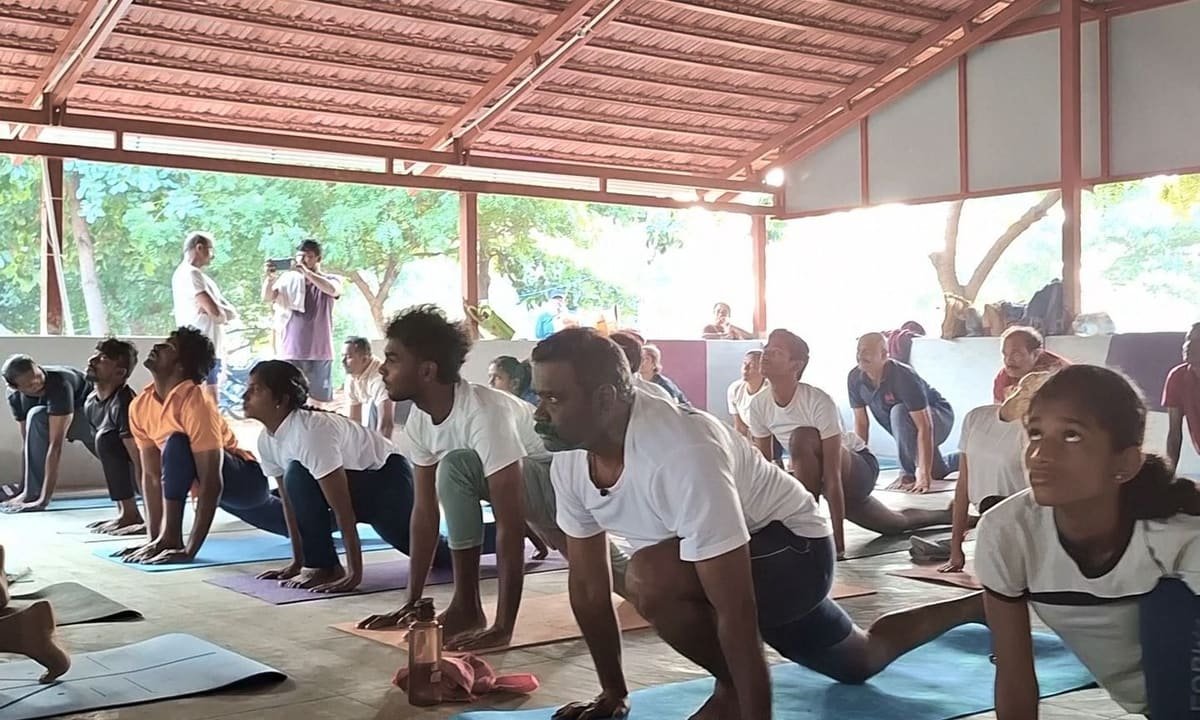
The academy teaches two classical styles, Traditional Hatha Yoga and Ashtanga Vinyasa Yoga, alongside yoga therapy for various illnesses and conditions, teacher training, and the annual Yoga Warrior challenge. Set on an organic farm with an open practice hall and red-earth grounds, it is a place to learn, grow and reconnect through a simple, mindful way of life.
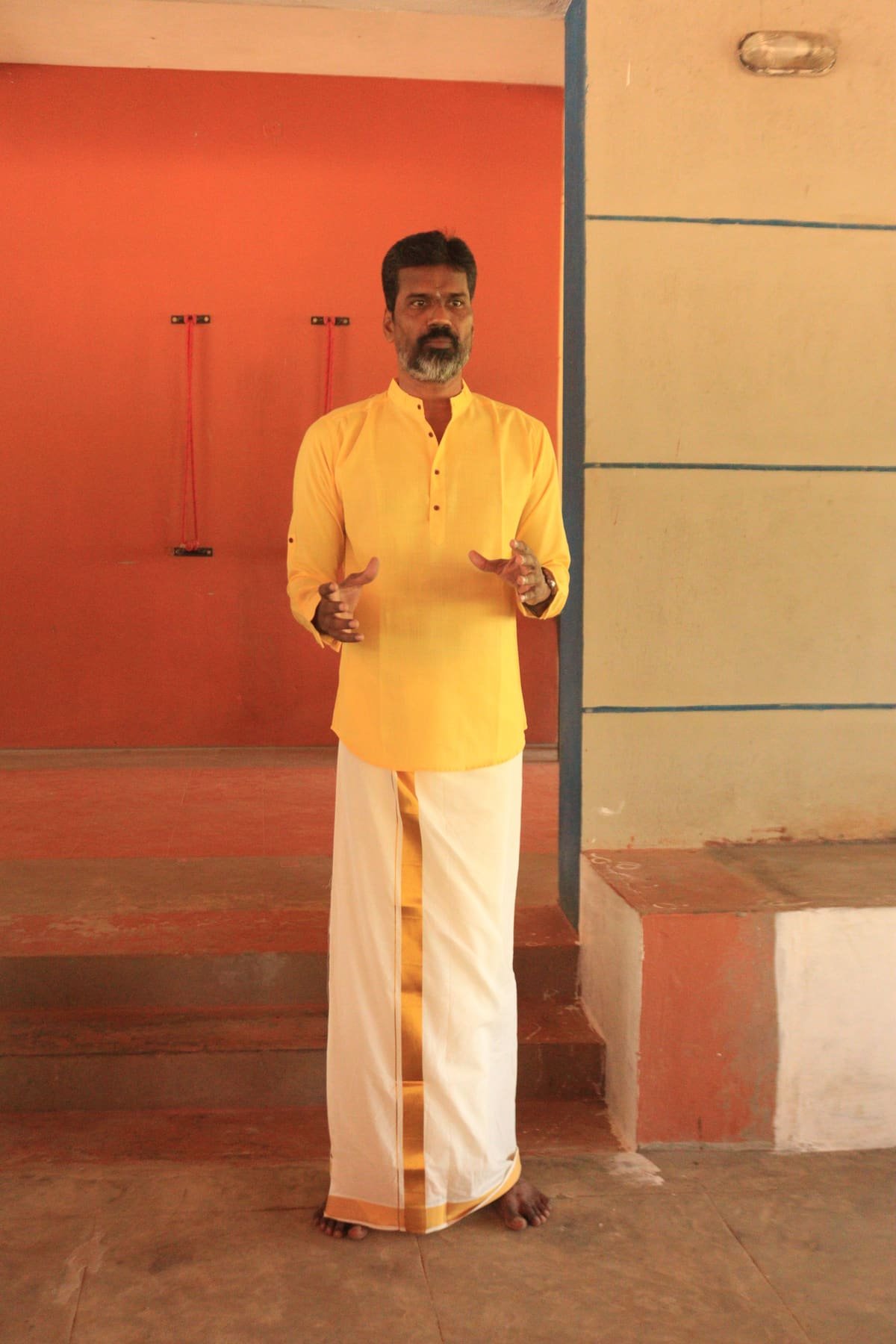
Yoga Master
His journey with yoga began at a very young age. What started as a child's curiosity became a daily discipline, and the discipline became a way of life.
Slowly he began to share what he practised, and over the years teaching became his life's work: today he has more than 25 years of experience in teaching alone.
Yet every single day still begins the same way, with his own practice. Before any class and before the day's work there is the mat, the breath and the quiet of early morning. It is this practice that brings his body and mind into coherence, and it is clear how much he enjoys it: the steady rhythm of Suryanamaskar, the stillness of a long hold, the calm that settles after pranayama. He is, above all, a sincere practitioner who teaches what he lives.
From that same practice grew his work in yoga therapy. Seeing how a well-designed, regular practice helped students, he began adapting yoga for people living with different illnesses and conditions, always alongside their medical care. His Foundation A sequence of asanas and three pranayamas, and the Yoga Warrior challenge he created to practise, preach and protect the heritage of yoga, come from the same root.
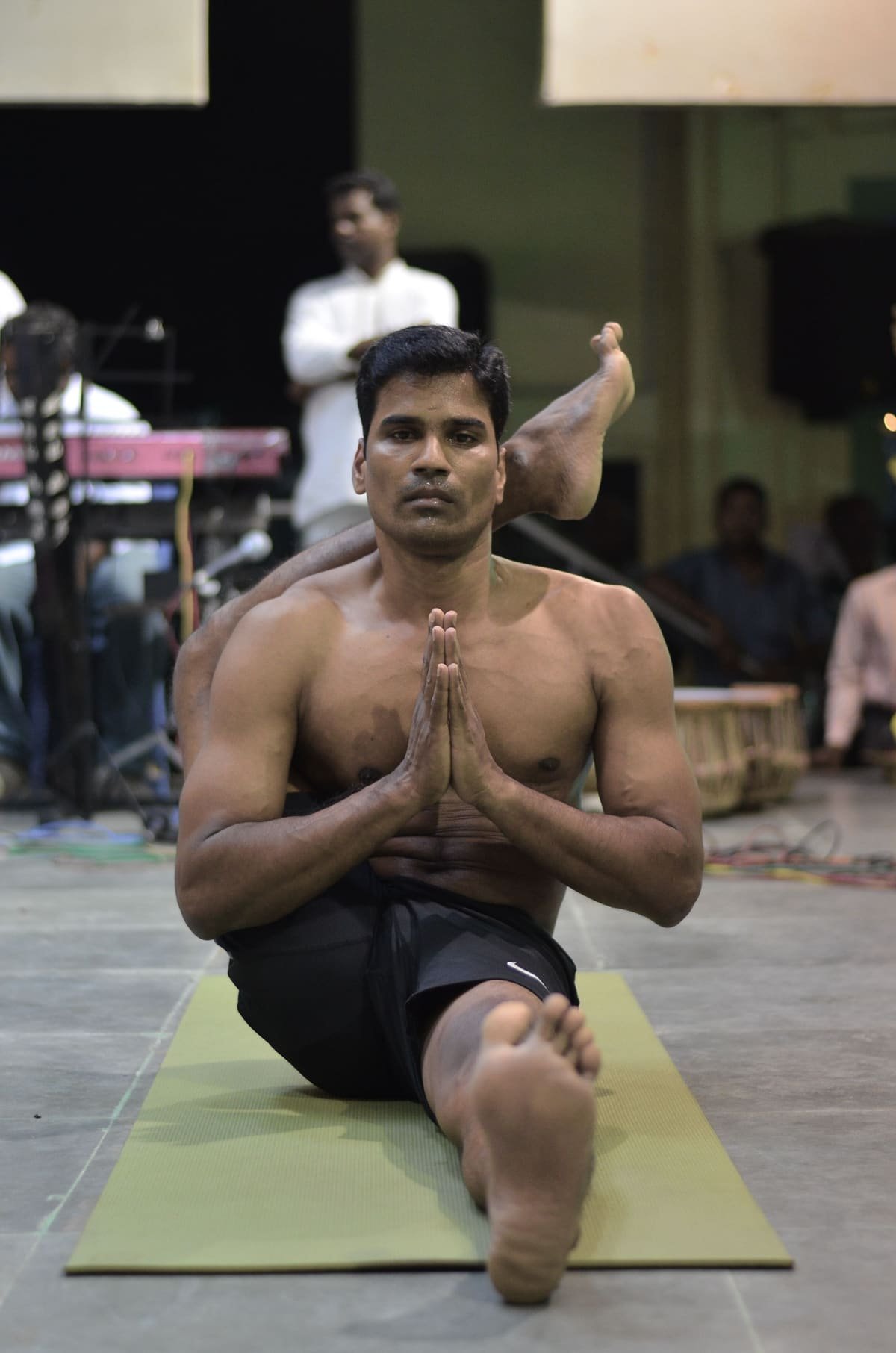
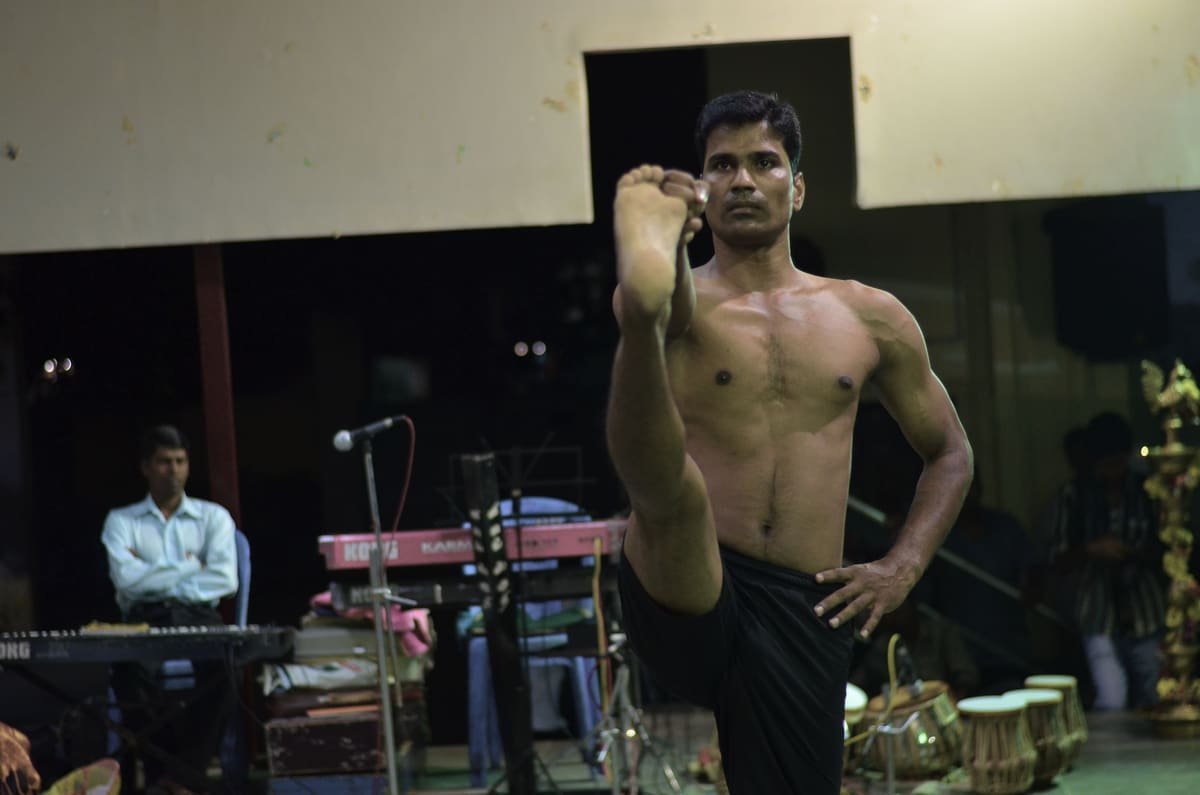
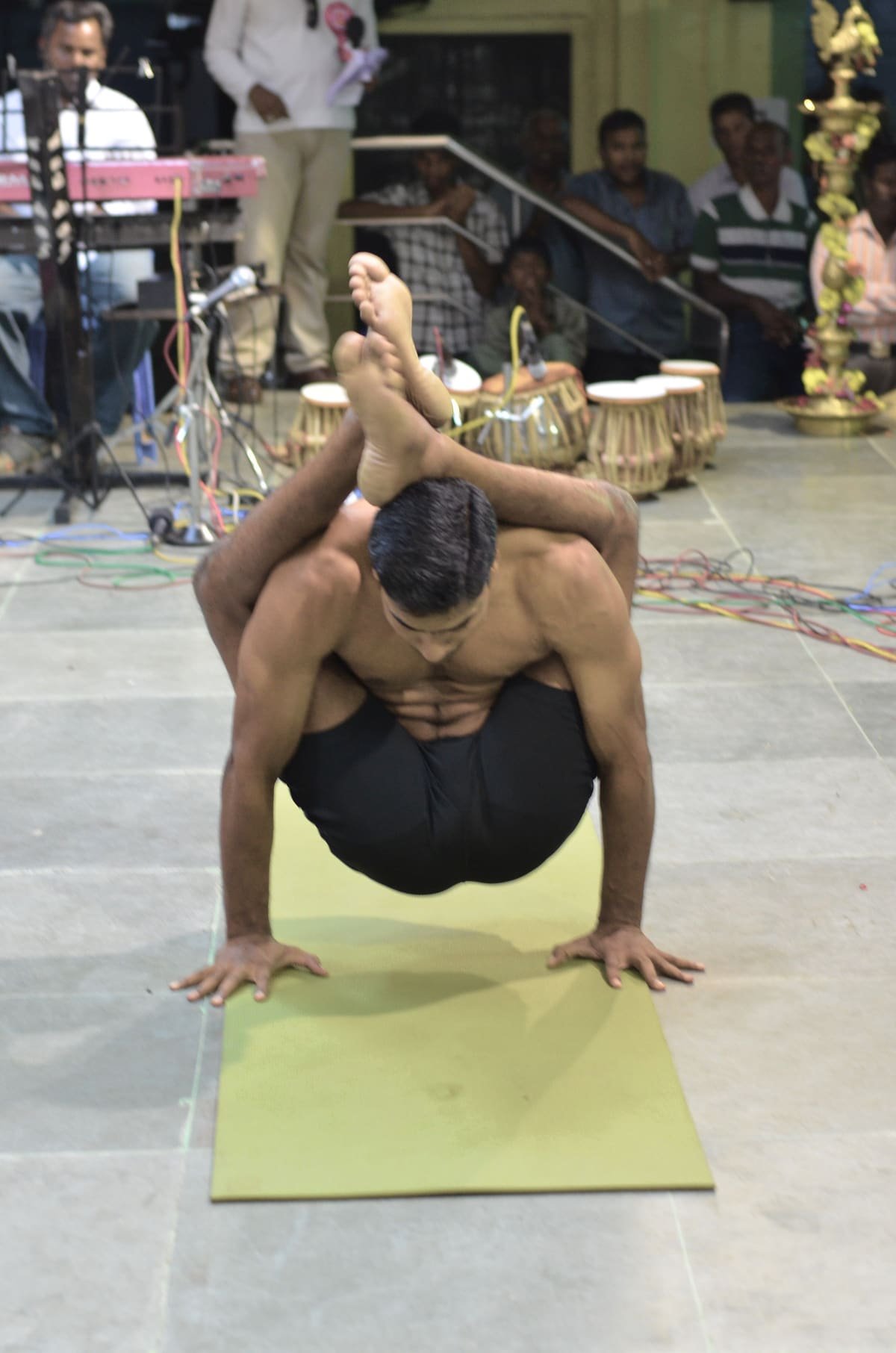
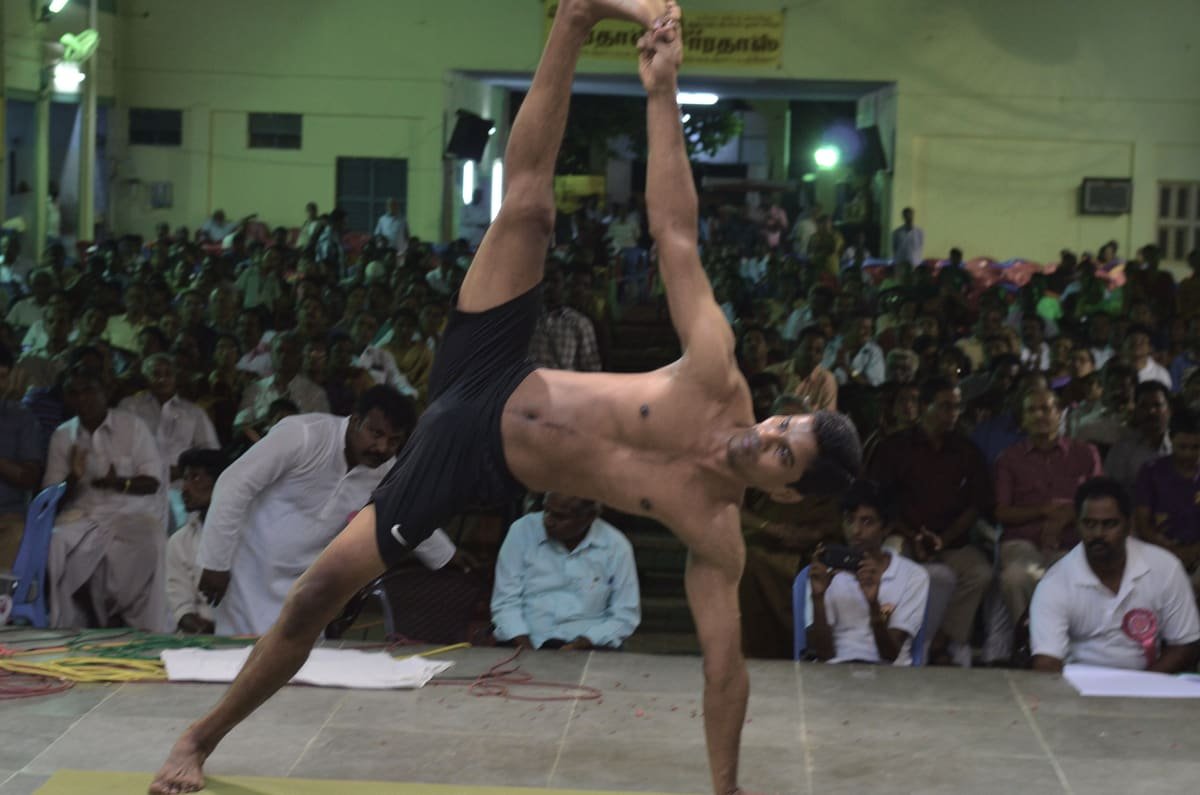
On stage: public demonstrations of Traditional Hatha Yoga
How we teach
Before any posture, we listen: the student's body, health, history, daily life and what they hope to gain from yoga.
Each student follows a routine with the right method and a pace their body can accept. Even in a group, everyone practises to their own capability.
Watching the breath, alignment, effort and hesitation shows where a student is struggling, often before they can say it.
Postures are adapted to the body, clear verbal counts link breath and movement, and a hands-on adjustment helps where it is needed.
Students come to understand how body and mind respond, accept where they are today, and let the body adapt slowly, without force.
Once the routine is familiar, it becomes a daily practice. Progress is reviewed and the practice grows step by step.
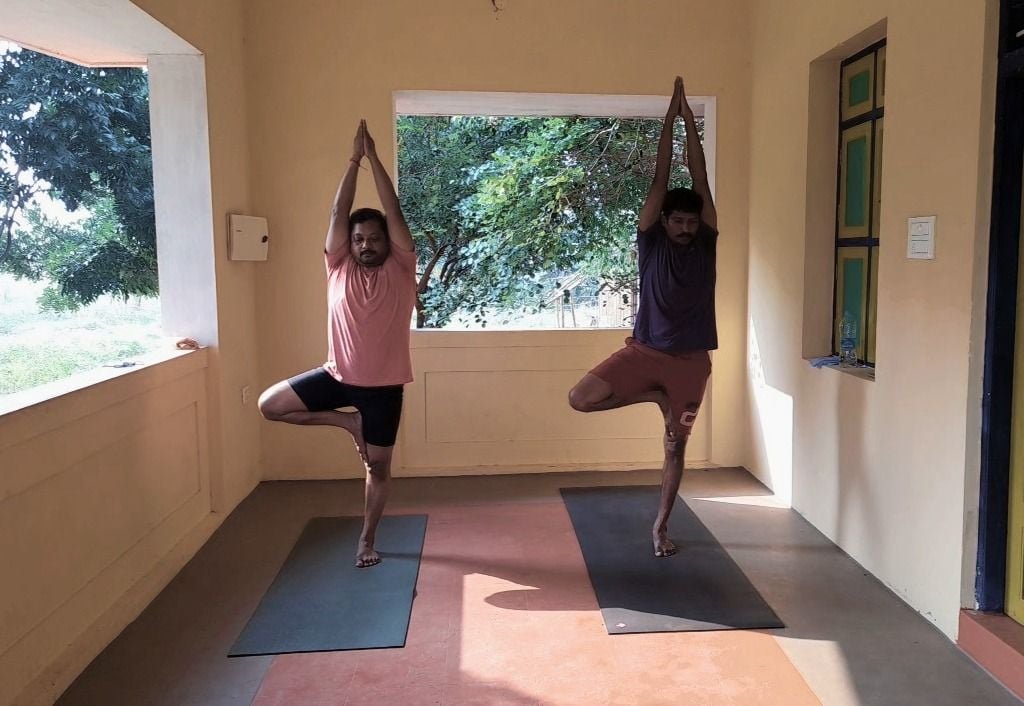
The setting
Practice at Yogapyasa happens close to the land: on red earth under the trees, in an open practice hall, and among the temples and granite hills that have shaped South Indian spiritual life for centuries.
No. 816, Thurusippatti, Palayapatti North, Manayeripatti Post, Budalur Taluk, Thanjavur (Tanjore) – 613402, Tamil Nadu, India
Yogapyasa Academy
At the heart of the farm
Under the spreading canopy of an old banyan tree on the academy farm stands a small shrine to the deity Shri Senthilkumar worships.
As the light fades over the fields and palmyra palms, its lamp glows in the dusk: a quiet reminder that at Yogapyasa, practice grows from devotion as much as from discipline.
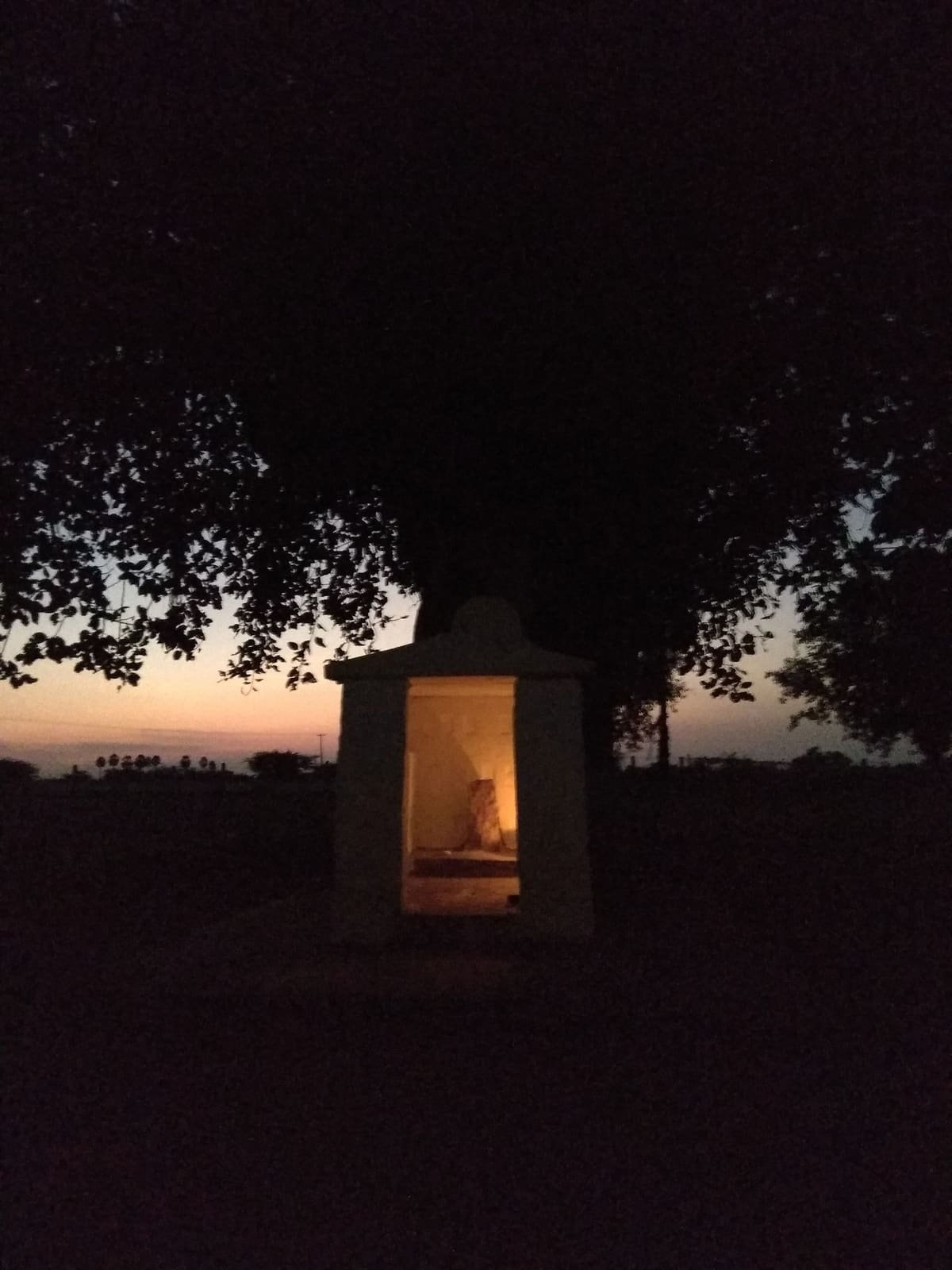
The land around the academy
Capital of the Chola kings. Its Brihadeeswarar Temple, completed in 1010 CE by Rajaraja Chola I, is part of the UNESCO World Heritage Site of the Great Living Chola Temples.
Photo: Shajinss, CC BY-SA 3.0, via Wikimedia Commons
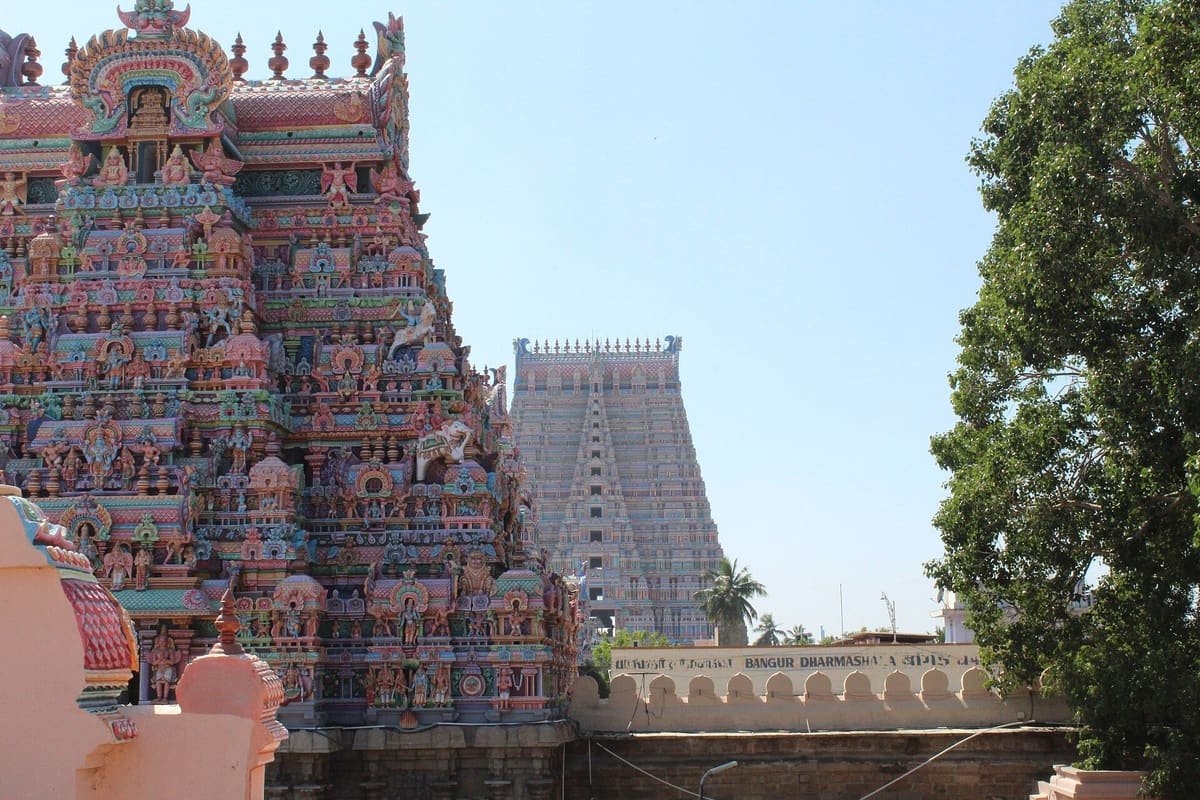
Home of the Sri Ranganathaswamy Temple at Srirangam, one of the largest functioning temple complexes in India, and the Rockfort temple on its ancient granite hill.
Photo: Writer hit, CC BY-SA 4.0, via Wikimedia Commons
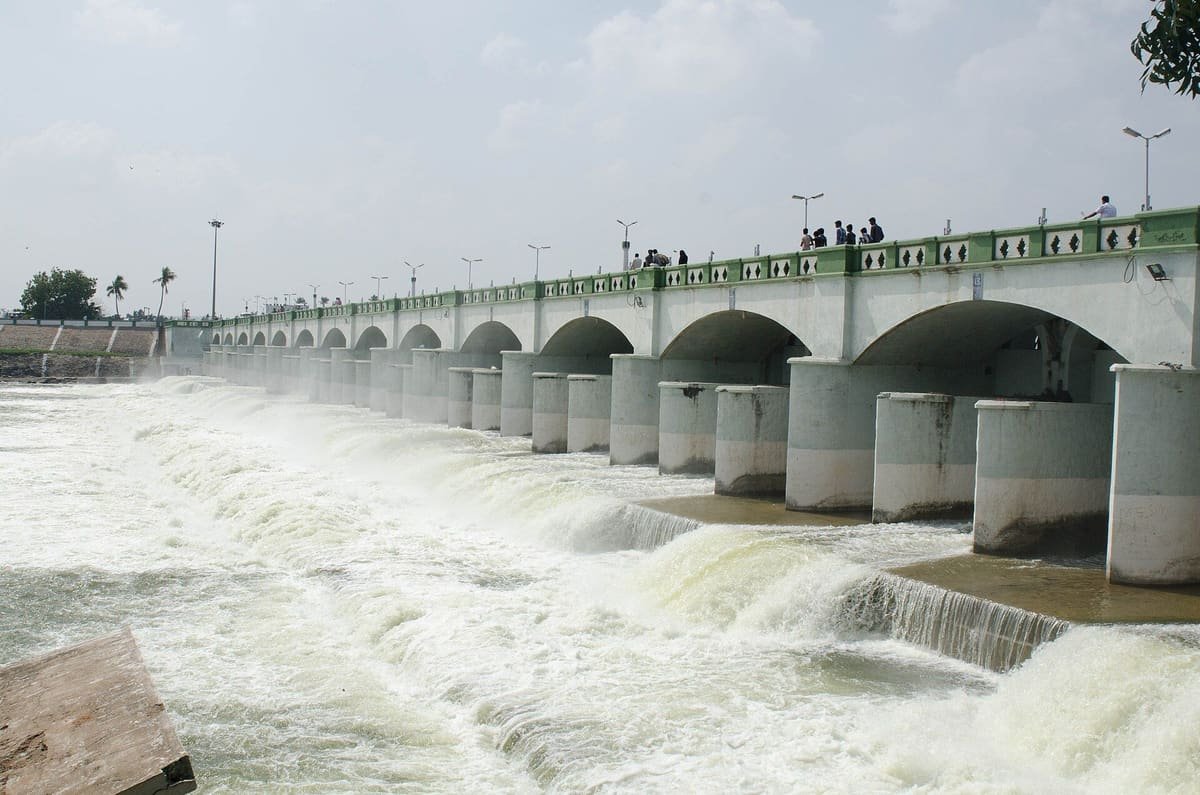
The Grand Anicut on the Kaveri, built by Karikala Chola around the 2nd century CE and still regulating the river: one of the oldest water works in use anywhere.
Photo: Ashwin Kumar, CC BY-SA 2.0, via Wikimedia Commons

The rice bowl of Tamil Nadu and a cradle of Carnatic music, Bharatanatyam and Thanjavur painting: a land where discipline and devotion are part of daily life.
Photo: Yogapyasa, near the academy