
Knowledge Centre · Yoga Warrior
The Person in the Mirror Is Not the Whole Story
Understanding the invisible experiences of the mind
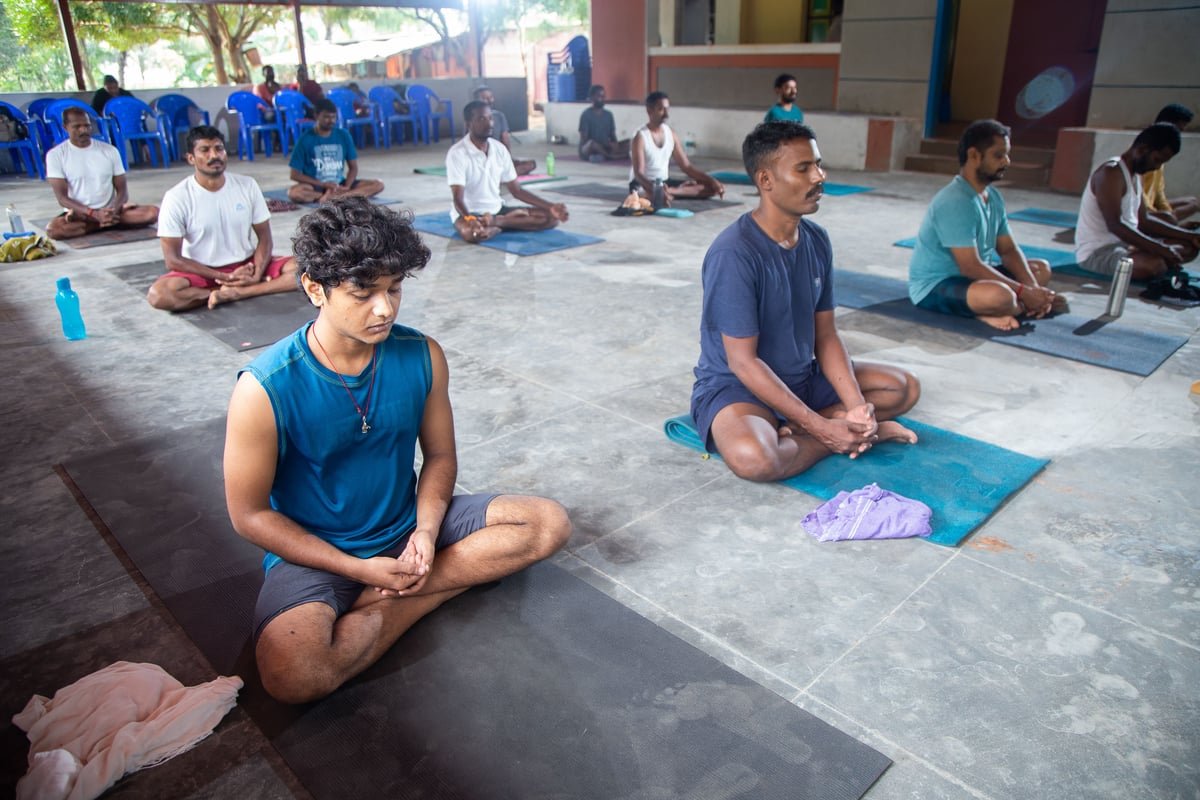
“Wherever my attention is, I am there.”
Most mornings begin the same way. You wash your face, look up, and there you are in the mirror: hair, skin, the shape of your shoulders, perhaps a few new lines around the eyes. Some days you are pleased with what you see. Some days you are not.
But think about what the mirror does not show.
- The argument from yesterday that still has not been settled.
- The worry about tomorrow.
- A conflict you are carrying quietly inside.
- Fear, or uncertainty about a decision.
- An emotional reaction you have not yet understood.
- The same thought, returning for the fifth time this morning.
- Expectations you have of yourself, and of other people.
The face in the mirror is real. It is just not the whole story.
The invisible struggle
Picture two people walking into the same office building at nine o'clock.
The first is replaying a conversation from the evening before. Something was said that hurt. On the stairs, at the desk, while the computer starts up, the conversation plays again: what was said, what should have been said, what might be said next time.
The second is thinking about a meeting that will happen next week. It has not happened yet, but it has already happened a dozen times in imagination, each version slightly worse than the last.
From the outside, both look perfectly normal. They smile, say good morning and switch on their screens. Inside, they are living in completely different places: one in yesterday, one in next week. Neither is fully in the room.
This is the relationship this article is about: between thought, attention and emotional experience. What we pay attention to shapes what we feel, often more than what is actually happening in front of us.
The mind does not always stay where the body is
There is a simple idea at the centre of the meditation practice taught at Yogapyasa:
“Wherever my attention is, I am there.”
It is not a scientific finding or a clinical claim. It is an observation anyone can test in ordinary life.
- You are at the dinner table with your family, but your attention is in tomorrow's work.
- You are at work, but your attention is in a disappointment from last month.
- You are sitting somewhere beautiful and quiet, but your attention is busy with problems that may never happen.
In each case the body is in one place and the person, in the sense that matters, is somewhere else. Physical presence and the direction of attention are not the same thing.
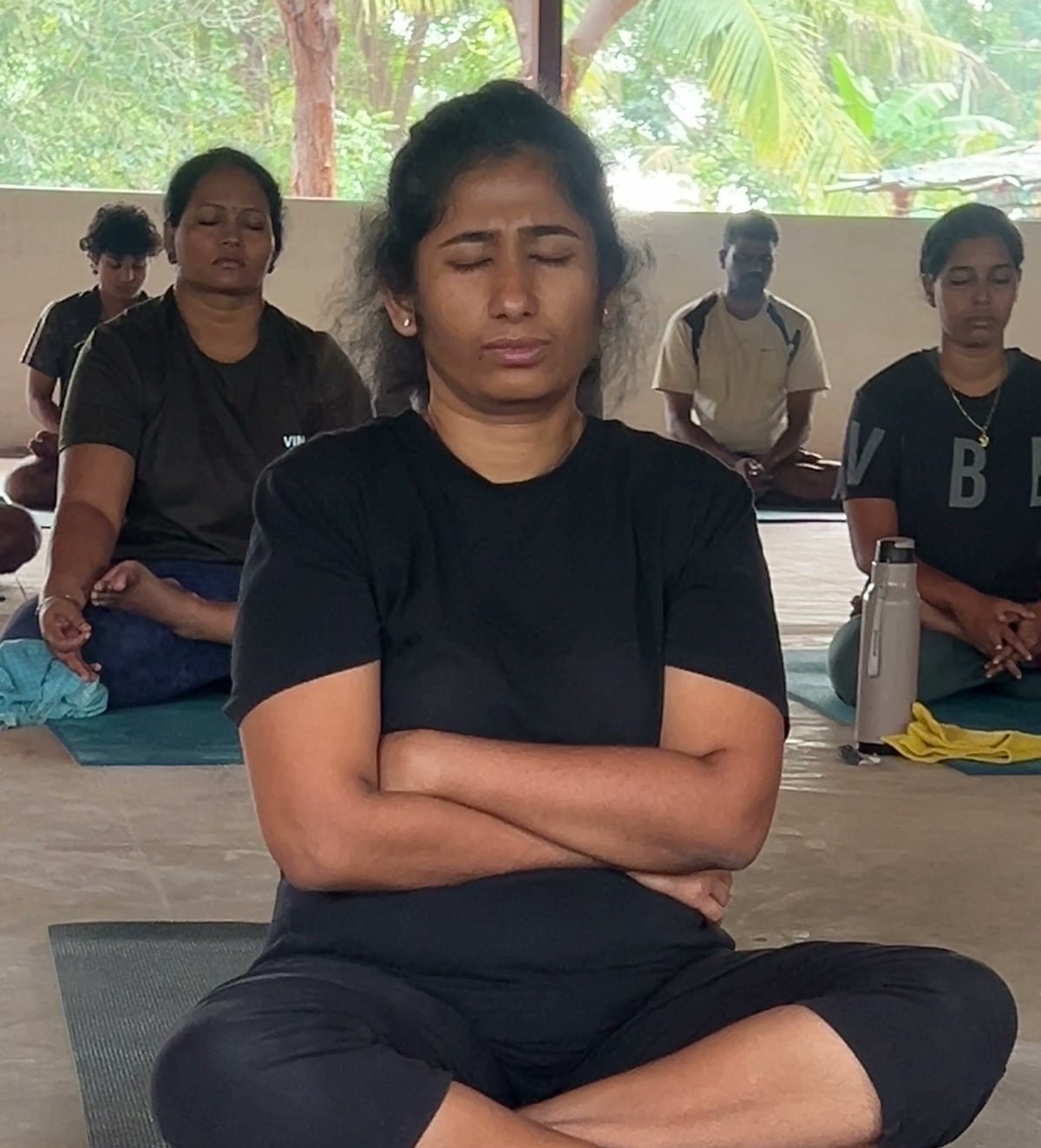
“The past is my teacher, not my place to live.”
The past and the present
None of this means we should forget the past or stop thinking about the future. Two short sentences help to draw the line:
“The past is my teacher, not my place to live.”
“My only working area is present, not the past.”
Learning from what happened is valuable. Planning for what is coming is sensible. But reliving an event again and again through thought is different from learning from it. And no matter how much we think about yesterday or next week, every actual decision and every actual action happens now.
This is not about suppressing memories, ignoring real problems, or pretending difficult experiences never happened. It is about noticing where attention has gone, and recognising that the present is the only place where anything can actually be done.
Why yoga becomes a field of observation
Observing the mind in the abstract is difficult. Yoga practice gives the mind something concrete to respond to, and its responses become easier to see. A few illustrations:
- In Vrikshasana, the tree pose, attention often wavers at the moment balance becomes difficult. The body wobbles at almost the same instant the mind drifts.
- During repeated movements, impatience may appear: how many more?
- In a sustained posture, expectations and the desire to move become surprisingly noticeable.
- In pranayama, attention is deliberately brought towards the breath, and you notice how often it leaves.
- In meditation, with the body still, thoughts and distractions can seem louder than ever.
These are examples of what can happen, not a description of what every person experiences. The point is that each practice creates a slightly different situation, and each situation shows something slightly different about the mind.
What can we learn about ourselves?
Yoga Warrior does not hand participants answers. It gives them situations in which questions like these become very practical:
- How do I react when things do not happen as I expected?
- Can I observe an emotion without immediately acting on it?
- How much of my attention is taken up by the past, or by an imagined future?
- Do I understand my own patterns of thought?
- Can I tell the difference between what is happening and what I am imagining about it?
Nobody needs to take part in Yoga Warrior to ask these questions. But a demanding, structured practice makes them hard to avoid.
Beyond the mirror
Yoga Warrior invites people to pay attention to the parts of themselves that do not appear in a mirror. The intention is not to create a perfect person, or to get rid of every difficult thought. Difficult thoughts are part of being human.
The intention is simply greater self-understanding: knowing a little better how our own attention, thoughts and emotions behave, especially when life becomes demanding.
The body is visible. Much of our inner experience is not. Yoga Warrior invites us to pay attention to what is usually unseen.
Keep reading
The other Yoga Warrior articles
- Yoga WarriorWhy Is Yoga Warrior So Demanding?Yoga Warrior is not a fitness contest or a show of flexibility. Here is why the programme is deliberately demanding, and what participants are really exploring.
- Yoga WarriorTwo Days, One Mind: The Experience Beyond EnduranceWhy not finish every challenge in one day? How the first day of Yoga Warrior shapes the second morning, and why movement, stillness, breath and meditation are combined.
- Yoga WarriorFrom Practice to Everyday Life: The Real WarriorWhat is a demanding yoga challenge worth if the learning stays in the hall? How Yoga Warrior self-observation can inform work, relationships and decisions.