
Knowledge Centre · Yoga Warrior
From Practice to Everyday Life: The Real Warrior
Applying self-observation to work, relationships and life's challenges
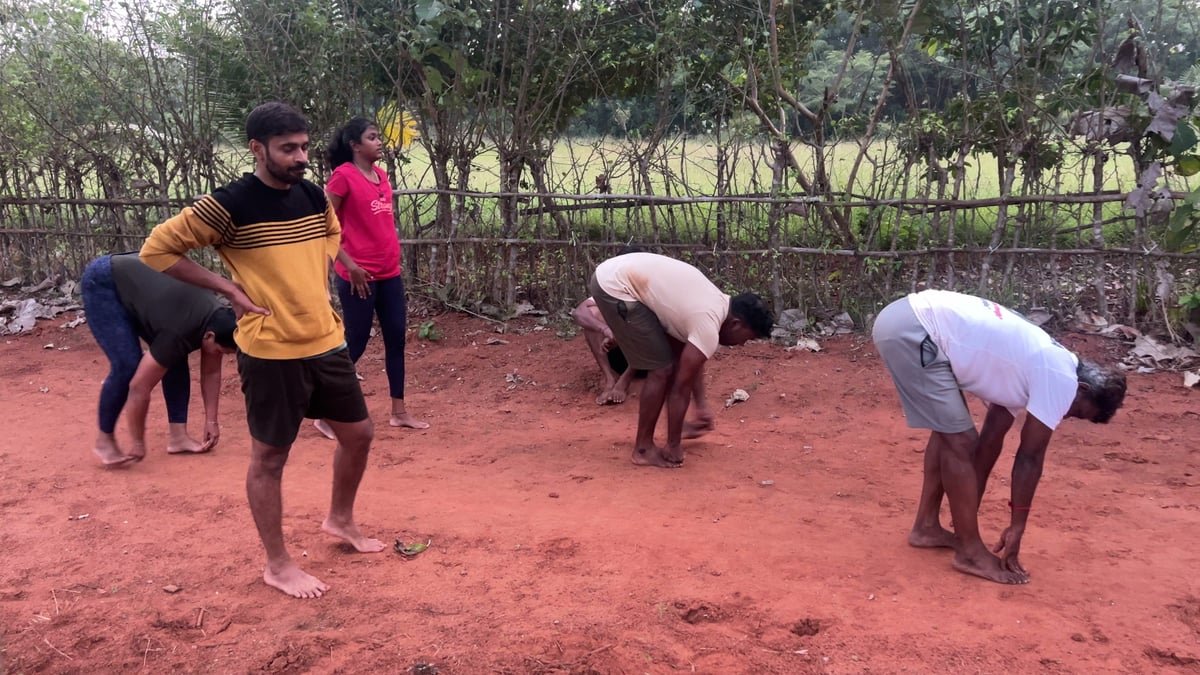
“The past is my teacher, not my place to live.”
It is the first working day after Yoga Warrior. The participant sits down at their desk, a little stiff, still carrying the memory of two long days in the hall.
An email arrives with bad news. A meeting is delayed by an hour. A colleague disagrees, firmly, with a decision they made. A deadline that looked comfortable suddenly does not.
There is no practice hall here. No instructor, no count, no audience. But this is also a challenge, and in some ways a harder one. How do they respond?
This is the question at the heart of Yoga Warrior. The practice does not end when the participant leaves the hall.
Life does not follow our preferred schedule
Everyone knows these situations:
- pressure at work;
- financial uncertainty;
- family responsibilities;
- disagreements in a relationship;
- difficult decisions;
- sudden, unexpected changes;
- personal disappointments;
- expectations that were never fulfilled.
We cannot control most of them. Yoga does not make them disappear, and it would be dishonest to suggest otherwise. What we can do is become more aware of our own responses to them. That is a smaller promise, and a more useful one.
What a demanding asana can teach
Think back to a difficult posture. The body is working hard, and difficulty arrives. With it may come frustration, impatience or fear.
In that moment there is a choice between reacting immediately and observing first. Observing means asking a few quiet questions:
- What is actually happening in my body?
- What is happening to my attention?
- Am I responding to the real situation, or to my expectations about it?
- Is it appropriate to continue, to modify, or to stop?
That last question matters. Sensible judgement and safe practice are part of the discipline. Continuing is not always the right answer; sometimes the wise response is to ease off or stop.
Now return to the desk on Monday morning. The same questions apply almost word for word. What is actually happening? Am I reacting to the email, or to what I fear it means? What is the sensible next step: continue, adjust, or pause?
The instruction Shri Senthilkumar gives in the hall, “Think one step at the moment. Stay in the position.”, carries over in the same way: one step at a time, steady attention, and good judgement about what is safe and sensible. It has never meant ignoring warning signs, in practice or in life.
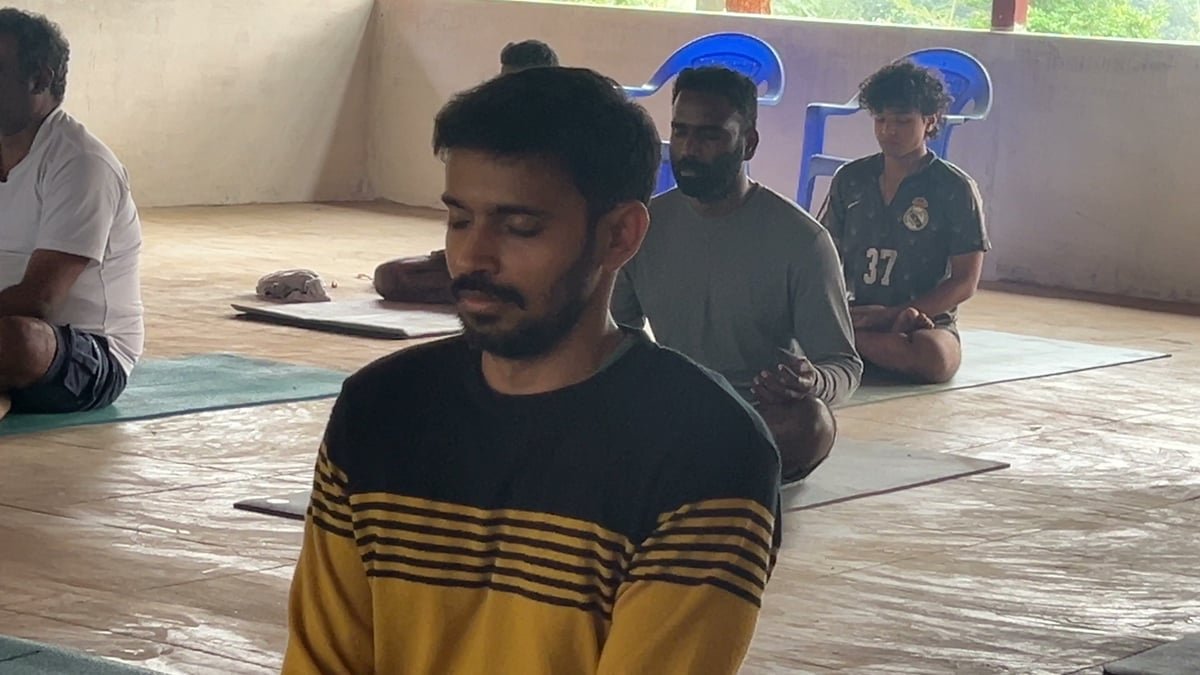
“Wherever my attention is, I am there.”
Attention in everyday life
“Wherever my attention is, I am there.”
Consider three ordinary scenes:
- Sitting with your family in the evening while your mind is still at work.
- Working through the afternoon while replaying yesterday's disagreement.
- Losing an hour to worry about an event that has not happened yet.
In each, attention has been taken over by a memory, an expectation or an imagined outcome. Two sentences help to sort out what belongs where:
“The past is my teacher, not my place to live.”
“My only working area is present, not the past.”
Learn from the past. Prepare for the future. But act in the present, because that is the only place action is possible.
Relationships: responding instead of reacting
Two people are talking. One says something sharp. The other feels hurt, then angry.
Within seconds, the mind gets to work. It brings up every previous disagreement. It builds assumptions about what the other person really meant. It prepares a defensive reply, or a sharper one.
Self-observation does not stop the hurt from arising. But it may create a small space between the feeling and the response: I am angry; I am already assuming things; let me hear what was actually said. In that space, a more considered response becomes possible.
This does not mean tolerating harmful behaviour or avoiding conversations that need to happen. Sometimes the right response is firm and clear. The aim is only that it should be a response, chosen, rather than a reaction, triggered.
Difficult decisions
Every difficult decision has two layers. There is the actual situation: the facts, the options, the information available. And there are the thoughts and emotions that gather around it: fear, worry, and a stream of imagined outcomes.
Sometimes the second layer grows so loud that it becomes hard to look at the first. A person can spend days anxious about a decision without ever clearly listing the choices.
Self-observation can help someone notice when this is happening. It does not replace practical problem-solving. Decisions still need information, judgement and responsibility, and meditation does not do that work for us. But noticing the pattern can make room to do it.
The lessons differ from person to person
Yoga Warrior does not produce the same lesson in everyone, and it would be wrong to promise a particular transformation. One person may become more aware of their impatience. Another may notice how often attention wanders. Another may come to value consistency and preparation. Someone else may understand something about their emotional reactions for the first time.
These are possibilities, not guarantees, and not the story of any particular participant. Each person takes away what their own experience shows them.

“You have been preparing for this moment throughout the year.”
Who is the real warrior?
At Yogapyasa, a warrior is not simply the person who completes the most repetitions or performs the most difficult posture.
A warrior is someone willing to observe themselves honestly. Someone who works patiently, recognises their limitations, makes sensible decisions and takes responsibility for them. That includes knowing the difference between discomfort and danger, and never continuing through injury or dangerous symptoms in the name of strength.
The challenge does not end when the event ends. Its value lies in what participants come to understand, and in how they choose to carry that understanding into their lives.
The real victory is not simply completing a challenge on the yoga mat. It is learning to meet life's challenges with greater awareness, discipline and clarity.
Keep reading
The other Yoga Warrior articles
- Yoga WarriorWhy Is Yoga Warrior So Demanding?Yoga Warrior is not a fitness contest or a show of flexibility. Here is why the programme is deliberately demanding, and what participants are really exploring.
- Yoga WarriorThe Person in the Mirror Is Not the Whole StoryTwo people can look equally healthy and calm while living very different inner lives. Why Yoga Warrior asks us to pay attention to what a mirror cannot show.
- Yoga WarriorTwo Days, One Mind: The Experience Beyond EnduranceWhy not finish every challenge in one day? How the first day of Yoga Warrior shapes the second morning, and why movement, stillness, breath and meditation are combined.