
Knowledge Centre · Yoga Warrior
Why Is Yoga Warrior So Demanding?
Understanding the purpose behind the challenges
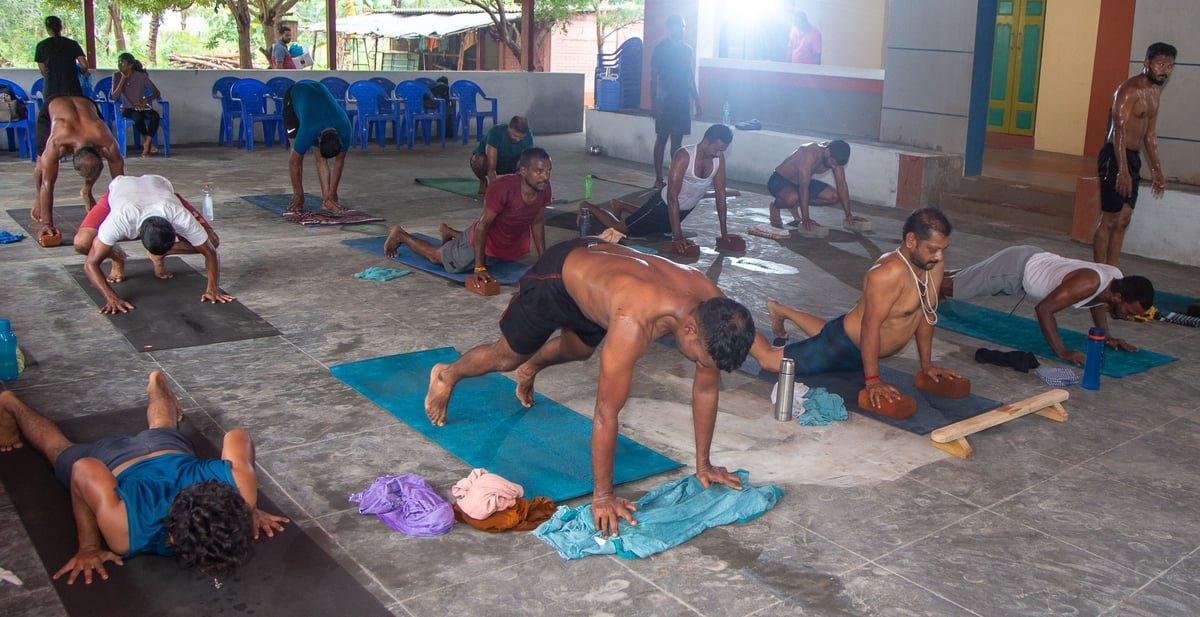
“The battle is within.”
Imagine scrolling through your phone and stopping at a short video. A man is lowering his chest towards a pair of brick blocks, rising, and lowering again. The counter on the screen says he is somewhere in the middle of several hundred repetitions. His shirt is soaked. Behind him, other people are doing the same thing. Nobody is cheering. It is very quiet.
Your first thought might be: why would anyone do this to themselves?
It is a fair question. Most of us come to yoga to feel better: to loosen a stiff back, to sleep well, to calm down after a hard week. A programme that asks people to complete demanding repetitions, hold postures for long periods and sit in meditation for an hour can look like the opposite of that. This article explains why Yoga Warrior is designed the way it is.
What Yoga Warrior is not
It helps to start with what the programme is not.
- It is not a conventional fitness competition.
- It is not an ordinary yoga class with more postures added.
- It is not a demonstration of flexibility.
- It is not a contest to find out who has the strongest body.
- It is not about performing difficult postures for public attention.
None of this is a criticism of those things. A good yoga class, a well-run fitness programme and a friendly sporting competition all have real value, and many Yoga Warrior participants enjoy them too. Yoga Warrior simply has a different objective.
The real purpose
Yoga Warrior is a programme for people who want to explore the relationship between the body and the mind through demanding but structured yoga practices. The challenges are the practical medium. They are how the exploration happens, not the reason for it.
Each challenge creates a situation in which a participant can observe four things about themselves:
- Physical capacity and endurance: what the body can sustain, and how that changes over time.
- Mental discipline and concentration: where attention goes, and whether it can be brought back.
- Breath regulation and control: how the breath responds to effort, and how it can be guided.
- Emotional resilience and inner stillness: how we meet frustration, doubt or the wish to stop.
These four are not separate compartments. When the body tires, attention often scatters. When attention scatters, the breath may become uneven. When the breath becomes uneven, small irritations can feel larger than they are. And when a person notices this and steadies the breath, the effort itself can feel different. Yoga Warrior is built around that interaction.
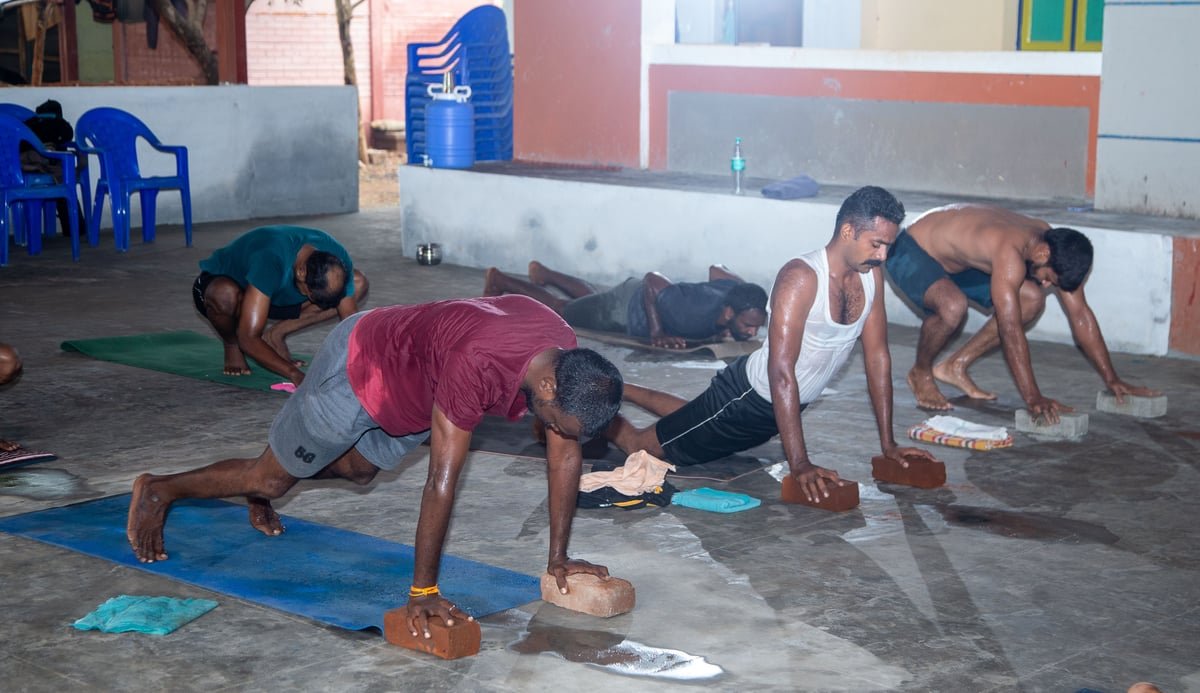
“Think one step at the moment. Stay in the position.”
Why begin with the body?
The mind is hard to observe directly. Ask someone to “watch their thoughts” and most people do not know where to begin. The body is different. It gives an immediate, practical experience that nobody has to imagine.
During a demanding movement, a participant may meet some of these:
- physical fatigue;
- attention that keeps drifting away;
- impatience, and counting how many repetitions remain;
- expectations about how it “should” feel;
- frustration;
- a fear of not finishing;
- the plain desire to stop;
- the urge to look at the person on the next mat and compare.
Not everyone meets all of these, and not in the same order. But whatever does arise becomes an opportunity. Instead of being swept along by it, the participant can notice it: this is fatigue; this is impatience; this is me comparing myself again. That simple act of noticing is the beginning of self-observation.
Why so many different kinds of challenge?
If the aim were simply to tire people out, one long exercise would be enough. Yoga Warrior instead includes very different kinds of practice, because each one creates a different physical and mental situation.
- Repetition-based movements test patience and sustained attention as the count grows.
- Dynamic asanas ask for coordination between movement and breath.
- Balancing postures show, very quickly, what happens to balance when attention wanders.
- Sustained postures reveal the restlessness that appears when the body is asked to stay.
- Pranayama turns attention towards the breath itself.
- Meditation removes movement almost entirely, leaving attention and thought to be observed.
Movement is different from stillness. Repetition is different from balance. Regulating the breath is different from physical endurance. Meditation is different again. Together they give a far wider view of oneself than any single practice could.
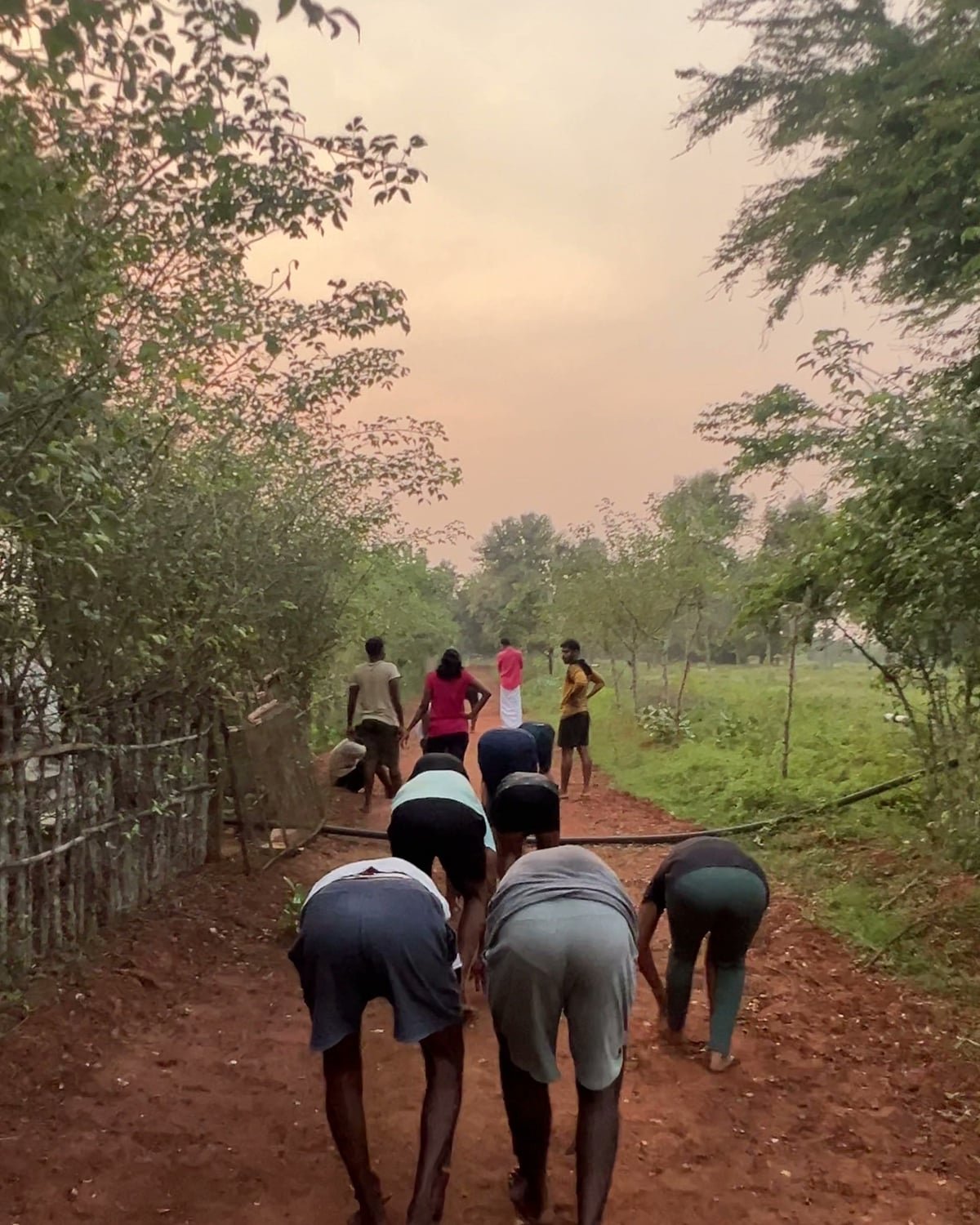
“You have been preparing for this moment throughout the year.”
It is not about being better than someone else
Because Yoga Warrior has numbers, it is easy to assume it is about winning. It is not. The programme is not designed to prove that one person is superior to another.
What matters is preparation, disciplined effort, and understanding one's own responses. There is a real difference between attempting something demanding suddenly, without preparation, and developing the capacity for it gradually over months of steady practice. The first is a gamble with the body. The second is what Yoga Warrior asks for, and what it hopes to inspire.
It is also worth saying clearly: Yoga Warrior is not a requirement for anyone who practises yoga. Most people will never take part, and their practice is no less valuable. The programme is an example of what disciplined, well-prepared practice can make possible, offered as an inspiration rather than a standard everyone must meet.
A note on the words “stay in the position”
Participants often hear a short instruction from Shri Senthilkumar: “Think one step at the moment. Stay in the position.”
It is about attention and steadiness, not about ignoring the body. Think only of the step in front of you rather than the whole distance. Stay calm, observe, and continue while it is safe to do so. Discomfort and danger are not the same thing. Sharp pain, dizziness, chest pain or any sign of injury are reasons to stop and tell the instructor. Good judgement is part of the practice, not a failure of it.
The question that matters
So, why is Yoga Warrior so demanding? Because it deliberately takes participants beyond their familiar physical and mental patterns, where it becomes possible to see those patterns clearly.
The real question at the end is not only how many repetitions someone completed. It is what they noticed about themselves while doing them.
- What did my mind do when the effort became hard?
- Where did my attention go, and could I bring it back?
- What happened to my breath?
- Did I compare, rush, give up inside, or stay?
The battle is not against another participant. The battle is within.
Keep reading
The other Yoga Warrior articles
- Yoga WarriorThe Person in the Mirror Is Not the Whole StoryTwo people can look equally healthy and calm while living very different inner lives. Why Yoga Warrior asks us to pay attention to what a mirror cannot show.
- Yoga WarriorTwo Days, One Mind: The Experience Beyond EnduranceWhy not finish every challenge in one day? How the first day of Yoga Warrior shapes the second morning, and why movement, stillness, breath and meditation are combined.
- Yoga WarriorFrom Practice to Everyday Life: The Real WarriorWhat is a demanding yoga challenge worth if the learning stays in the hall? How Yoga Warrior self-observation can inform work, relationships and decisions.