
Knowledge Centre · Yoga Warrior
Two Days, One Mind: The Experience Beyond Endurance
Why Yoga Warrior is designed as a two-day programme
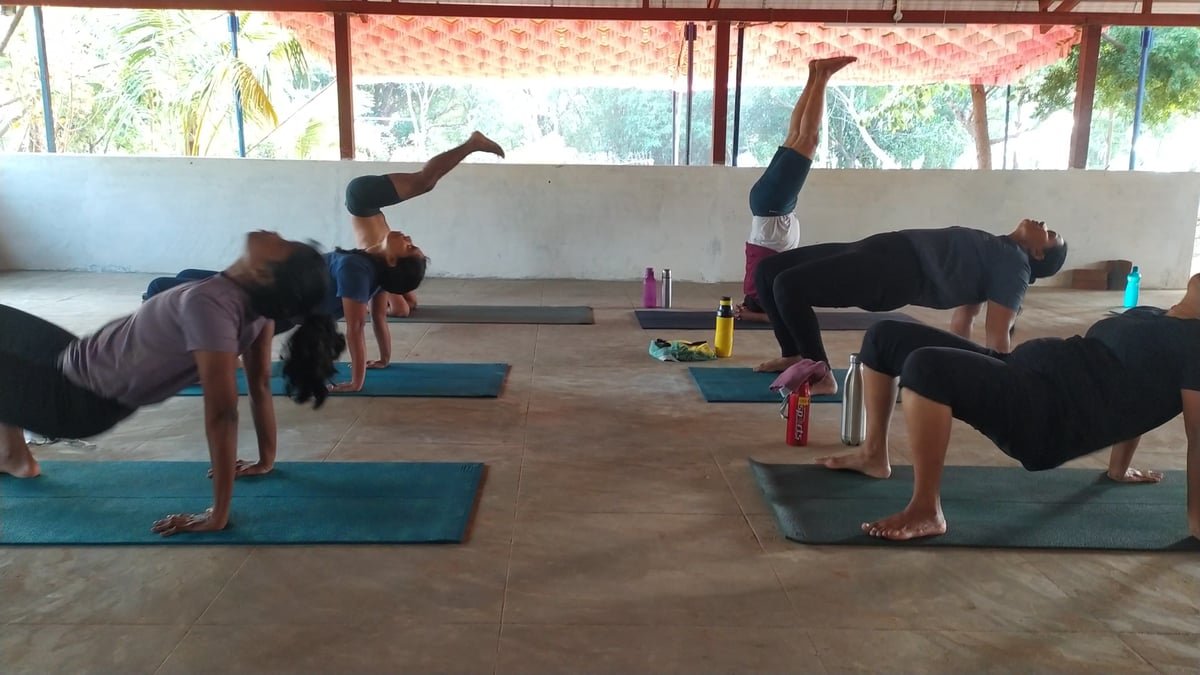
“My only working area is present, not the past.”
When people first see the Yoga Warrior programme, one practical question comes up again and again:
“If all the challenges are already planned, why not finish everything in one day?”
It would certainly be simpler. But the two-day format is not a matter of scheduling convenience. It is part of the experience the programme is designed to create. Yoga Warrior 2026 takes place on 18 and 19 December, from 7:00 AM to 6:00 PM on both days, and the night in between matters as much as either day.
The first day does not end with the last challenge
Imagine a participant at the end of the first day.
The final challenge is complete. They roll up their mat, drink some water and walk out of the hall. The body feels heavy. On the way back to their room, one particular challenge keeps returning to mind: the moment it became hard, the moment they nearly stopped, or the moment it unexpectedly became easier.
They may feel satisfied. They may feel disappointed about something. They may simply feel uncertain. And somewhere in the evening, they begin to think about tomorrow morning.
The challenges ended in the hall. The experience did not.
The second morning
The next morning, the participant wakes up in a body that feels different from the day before. The first day's experience now shapes their expectations, their confidence and their readiness, sometimes in ways they did not expect.
Different people meet this morning differently. One feels confident. Another feels unsure. Someone else realises they need to begin slowly and patiently. None of these responses is wrong.
What matters is whether the participant can recognise their own condition honestly and respond sensibly. That includes physical honesty. Ordinary stiffness and tiredness after a demanding day are expected. Pain that signals injury, or any dangerous symptom, is different: it is a reason to stop and speak to the instructor, not something to push through. Recognising that difference is part of what the second day asks.
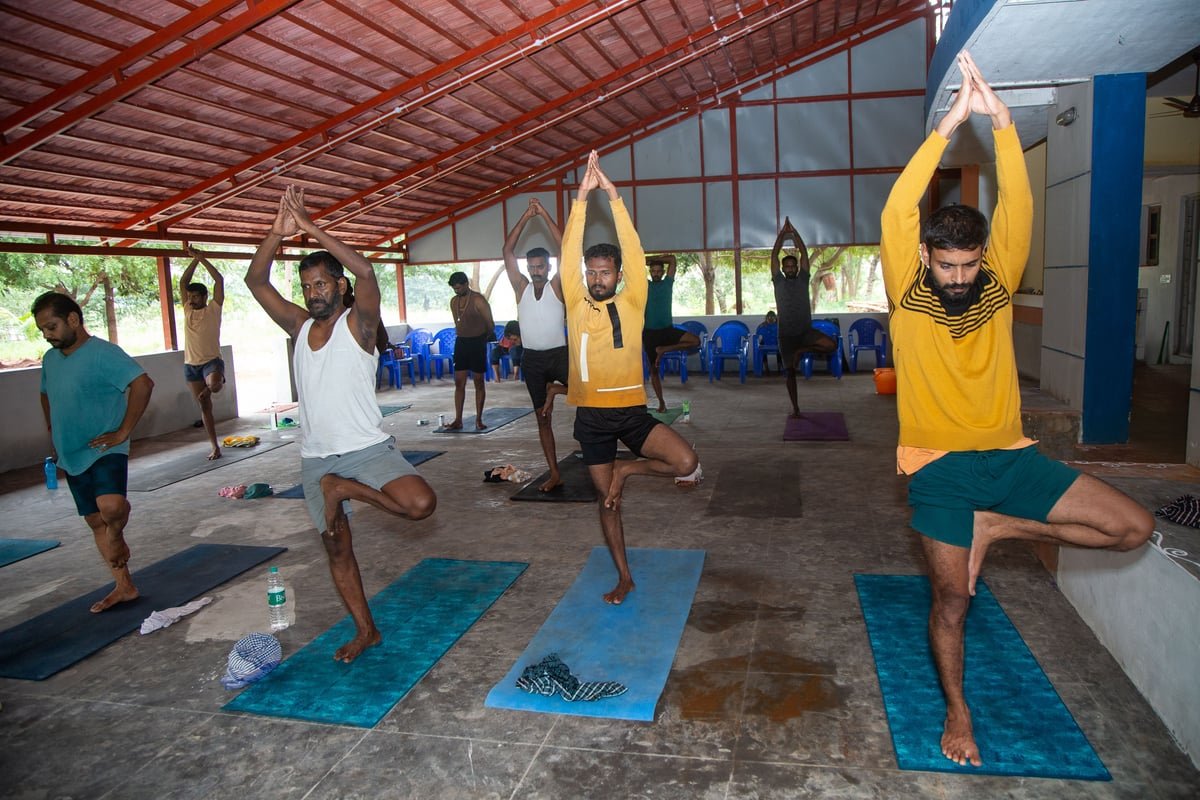
“The battle is within.”
Different practices, different experiences
Yoga Warrior does not repeat one activity for two days. Its challenges are deliberately varied, because each type of practice puts a person in a different situation.
Repetition-based movements
Repeated movements ask for sustained effort and sustained attention. As the count rises, a participant may notice fatigue, impatience, wavering concentration, or a growing preoccupation with how many repetitions remain.
Movement and balance
Dynamic movements and balancing postures ask for coordination, stability and attention together. The body is constantly changing position, and the participant has to keep working with it rather than against it.
Stillness in asanas
A sustained posture changes the question entirely. The body is asked to stay. In that stillness it becomes easier to see the relationship between physical position and mental activity: impatience, expectations, and the simple urge to move.
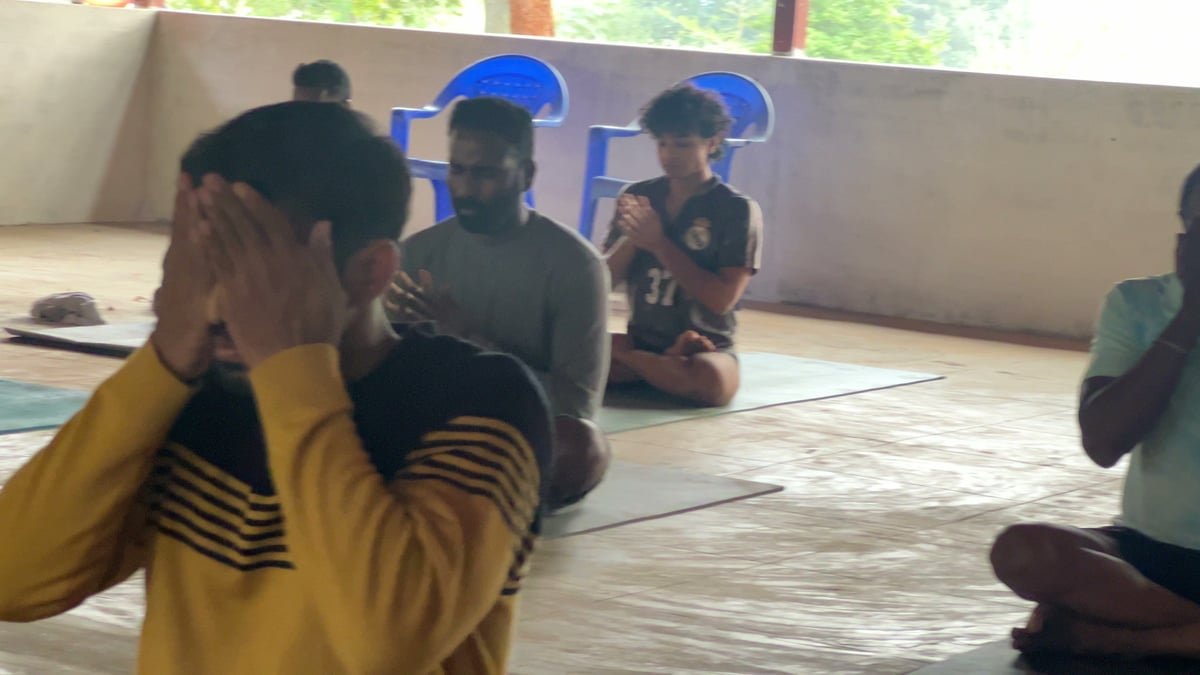
“Wherever my attention is, I am there.”
Pranayama
Breath regulation brings in another dimension. Participants practise the prescribed breathing techniques under the instructor's guidance. The attention moves from the muscles to the breath itself, and from effort towards regulation.
Meditation
Meditation offers an opportunity to observe attention and thought directly. It is a very different experience from completing physical movements or holding a posture. Many people find that, once the body is still, the activity of the mind becomes far more noticeable.
Why combine them?
Because no single activity shows the whole picture. Someone may be calm in stillness and restless in repetition. Someone else may be steady through physical effort and surprisingly unsettled when asked to sit quietly with the breath.
By combining movement, stillness, physical effort, breathing and meditation across two days, Yoga Warrior gives each participant a wider opportunity to see how they respond: not in one situation, but in many.
The journey begins long before December
None of this is meant to be attempted suddenly. A participant's Yoga Warrior journey begins well before the event, with months of steady preparation.
Take Suryanamaskar as an illustration. Someone might begin with a few rounds each morning, practise them with care, and add a little more over weeks and months as the body and breath adapt. Small, consistent practice gradually builds capacity that could never be forced in a day.
There is no single preparation routine that suits everyone. Age, health, experience and daily life all differ. What does not change is the principle: progressive, sensible preparation under guidance, rather than sudden effort.
One mind, two days
The two days of Yoga Warrior are not two separate tests. They are one continuous experience, and the night between them is part of it. The programme is interested not only in what participants perform, but in how they meet the continuing demands of the programme, again, under different conditions.
The first day presents the experience. The second day reveals how we meet that experience again.
Keep reading
The other Yoga Warrior articles
- Yoga WarriorWhy Is Yoga Warrior So Demanding?Yoga Warrior is not a fitness contest or a show of flexibility. Here is why the programme is deliberately demanding, and what participants are really exploring.
- Yoga WarriorThe Person in the Mirror Is Not the Whole StoryTwo people can look equally healthy and calm while living very different inner lives. Why Yoga Warrior asks us to pay attention to what a mirror cannot show.
- Yoga WarriorFrom Practice to Everyday Life: The Real WarriorWhat is a demanding yoga challenge worth if the learning stays in the hall? How Yoga Warrior self-observation can inform work, relationships and decisions.